



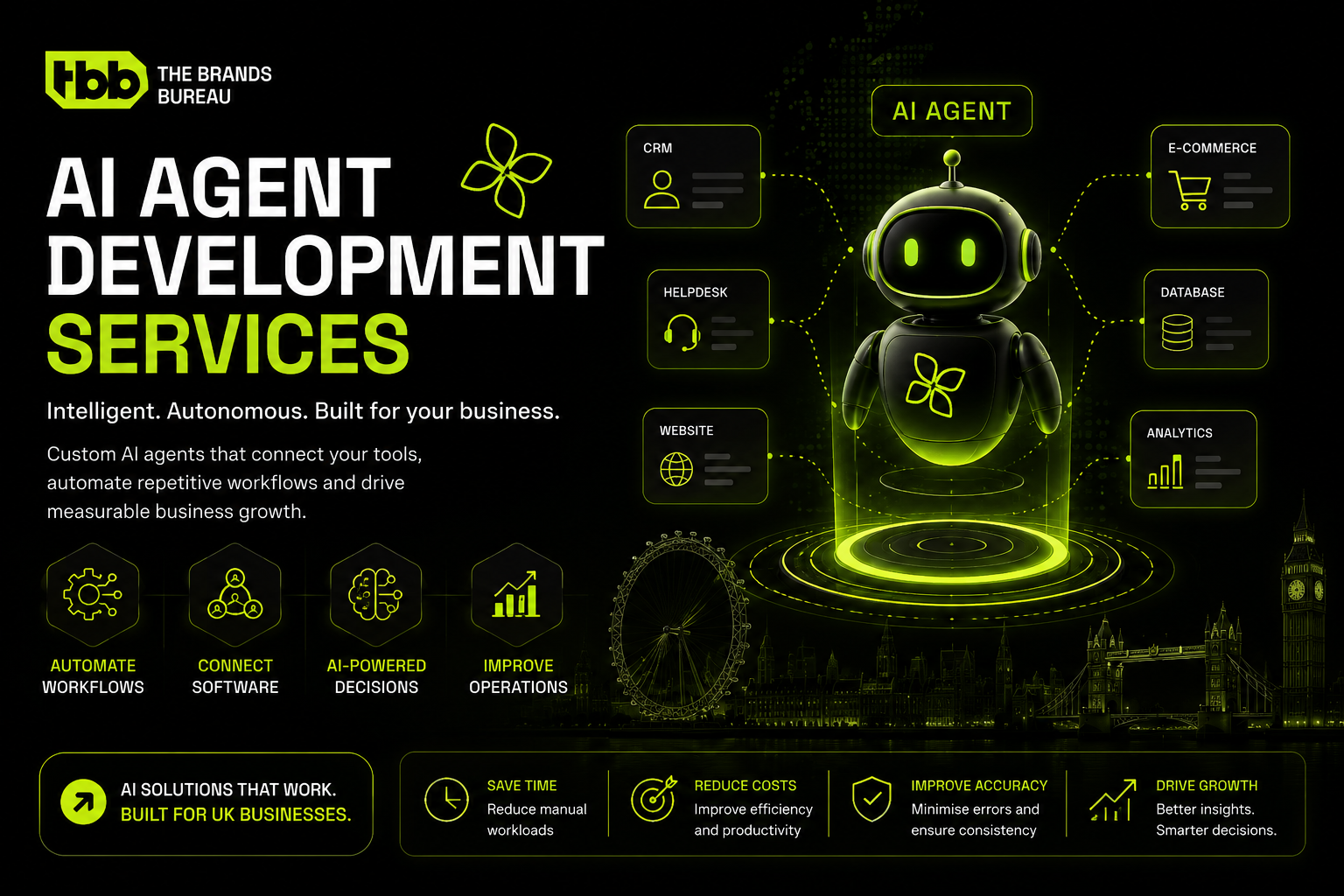
AI agent development services help businesses build AI-powered systems that can interpret requests, use approved tools, complete multi-step tasks and work within defined business rules. For UK companies, the right solution can automate repetitive operations, improve customer support and connect existing software without requiring every task to pass through a human operator. The key is choosing an agent that solves a measurable business. The main services, development options, costs, risks and questions to ask before hiring a provider.
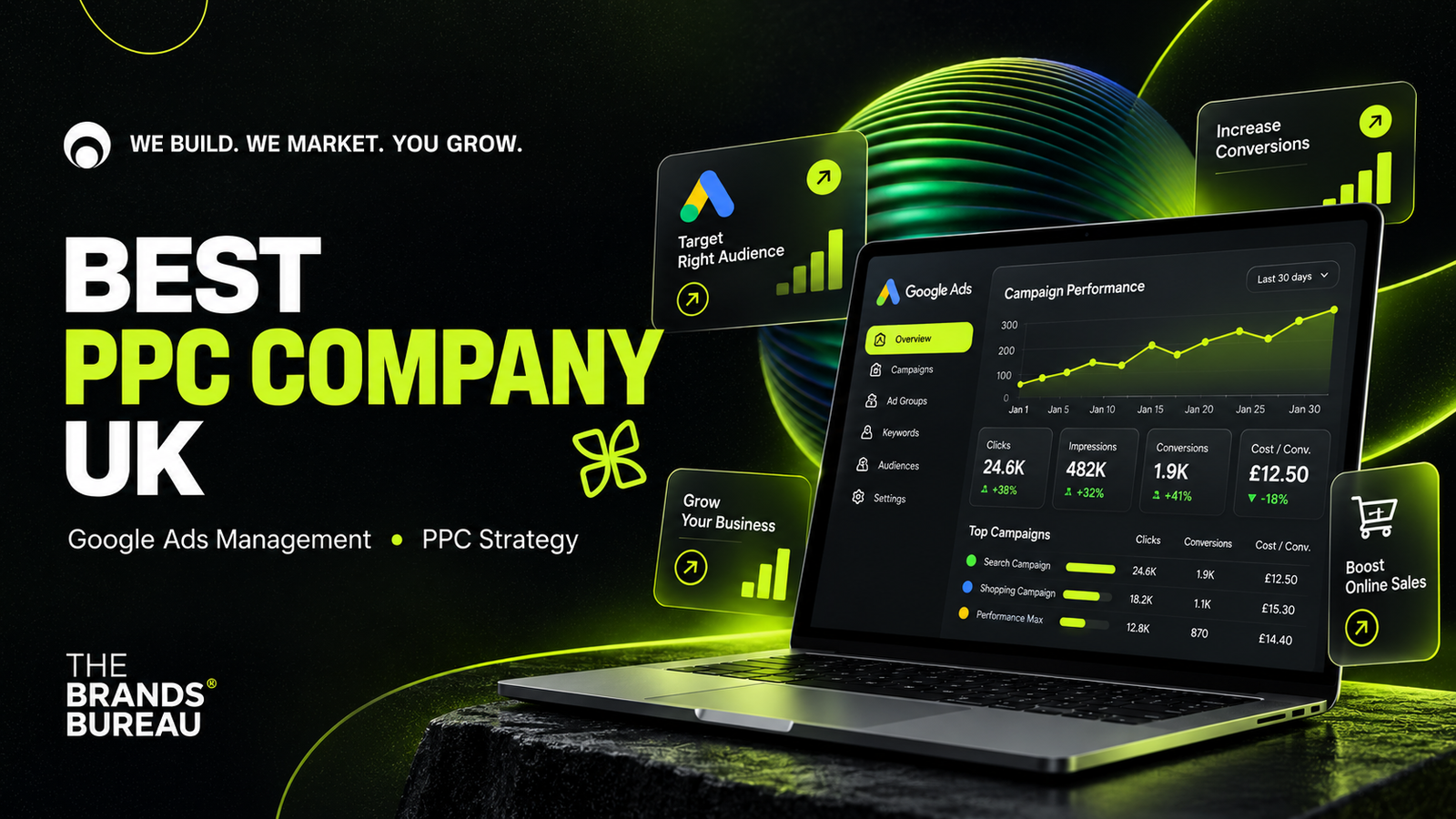
AI agent development services cover the planning, design, development, integration, testing and maintenance of AI systems that perform specific tasks. Unlike a basic chatbot that mainly responds to prompts, an AI agent can follow a workflow, retrieve information, call approved tools and decide which permitted action to take next.
The exact scope depends on your business needs. A project may involve a single customer support agent or a network of specialised agents working with your CRM, ecommerce platform and internal knowledge base.
Typical services include:
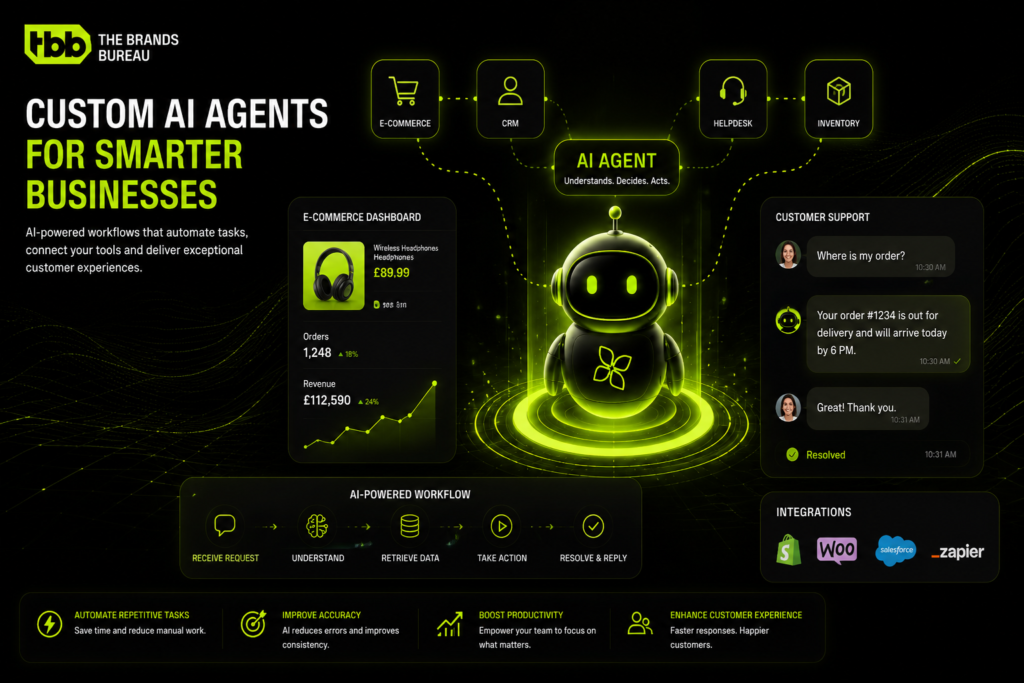
Traditional automation follows predefined rules. An AI agent can interpret less structured information and select among approved tools or actions based on the task and available context.
For example, a conventional rule might send every order-status enquiry to the same workflow. An AI agent could identify the customer’s question, retrieve the relevant order information and draft an appropriate response. However, developers should keep sensitive actions, such as issuing refunds, behind explicit permissions and approval rules.
Expert insight: Start with the process, not the technology. If a simple rule-based workflow solves the problem reliably, adding an AI agent may introduce unnecessary cost and complexity.
Custom AI agents work best when a business has repeatable processes, accessible data and a clear way to measure success. They can support small businesses as well as large enterprises, but the ideal implementation differs by company size and operational risk.
Agents can classify customer enquiries, retrieve order information, summarise product reviews and help support teams manage returns. Shopify or WooCommerce integrations may be useful, depending on the store’s platform and available APIs.
Plumbers, salons, repair companies and other service providers can use agents to answer routine questions, qualify enquiries, collect booking details and route leads to the right employee.
Agents can organise campaign research, prepare reporting summaries, categorise leads and coordinate repetitive administrative tasks. Human review remains important for public-facing claims and campaign approvals.
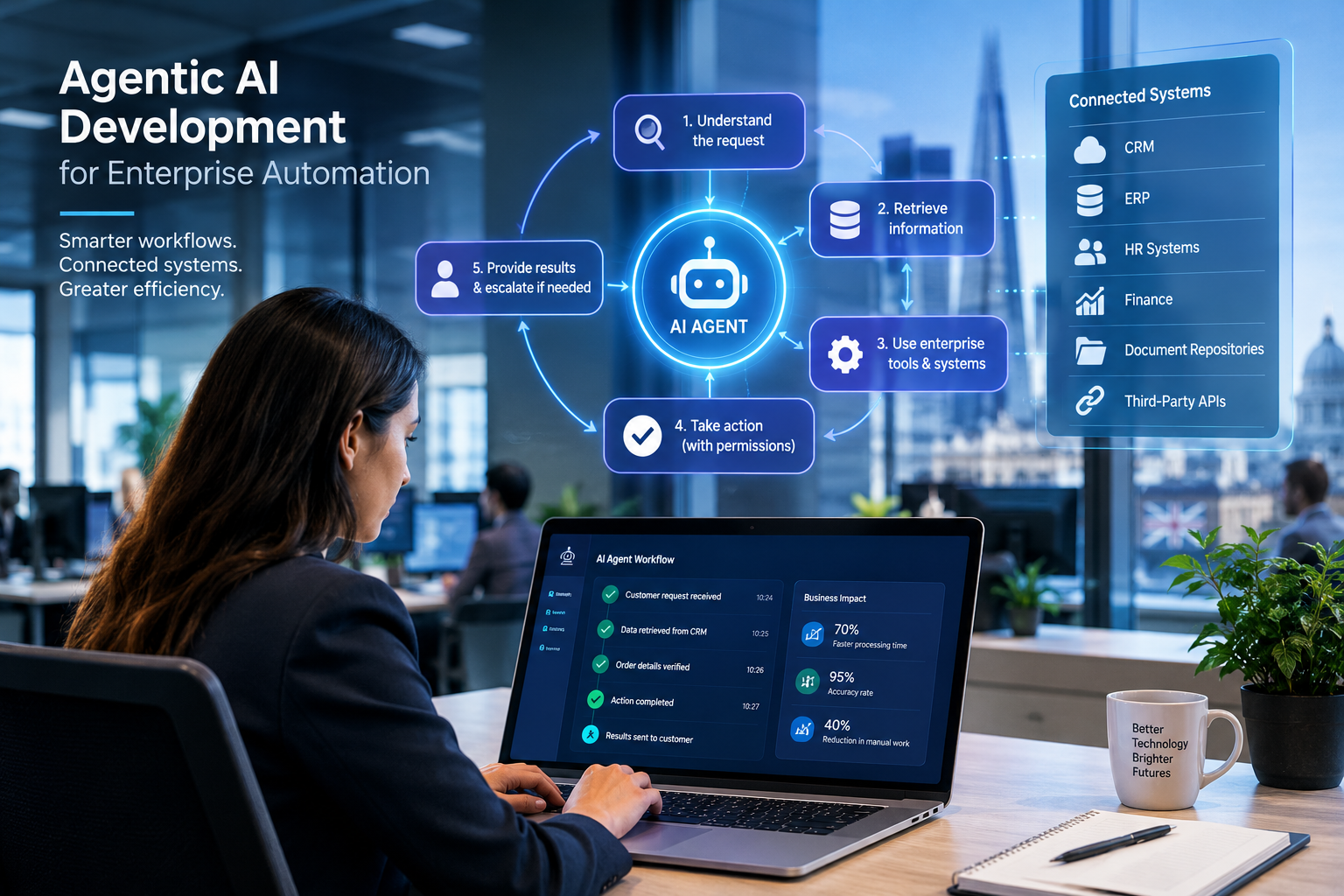
Enterprise projects may involve internal knowledge retrieval, document processing, IT service management and controlled workflows across several business systems. Access controls, audit logs and governance become especially important.
Consider a Manchester ecommerce business receiving a high volume of repetitive delivery enquiries. A narrowly scoped agent could identify the order, retrieve tracking information through an authorised integration and draft a response. Staff could review exceptions, while the business measures resolution time, answer accuracy and escalation rates.
This is an illustrative scenario, not a customer case study or a claim of measured results.
Expert insight: Choose a workflow with frequent requests, accessible data and low consequences if the agent needs to escalate. Avoid starting with a process that makes irreversible financial or legal decisions.
The cost of an AI agent depends on its complexity, integrations, security requirements and ongoing support needs. A simple internal assistant generally requires less development than a multi-agent platform that connects to business-critical systems and performs actions autonomously.
There is no reliable universal price for custom development. The table below is a planning framework, not a quotation or verified market-price survey.
| Project type | Typical scope | Main cost drivers |
| Basic AI assistant | Answers questions using approved documents | Knowledge preparation, model usage, testing |
| Workflow automation agent | Completes tasks across one or two systems | API integrations, business rules, error handling |
| Customer service agent | Retrieves customer data and supports enquiries | CRM integration, permissions, escalation logic |
| Multi-agent platform | Coordinates several specialised agents | Architecture, orchestration, monitoring, security |
| Enterprise AI solution | Supports complex, regulated or business-critical workflows | Governance, infrastructure, testing, support |
Ask providers to separate these expenses:
For example, a Leeds-based service company that needs an agent to qualify leads and prepare booking requests has a different scope from an enterprise that needs an agent to access several internal databases and update financial records.
Request a phased quote with defined deliverables, exclusions and ongoing costs. A low initial fee can become expensive if the proposal omits integration work, monitoring or support.
Expert insight: Compare the total cost of ownership, not just the development fee. Include model usage, human review, maintenance and the cost of correcting errors.
The best AI agent developer UK businesses can hire is one who understands the workflow, explains technical trade-offs and demonstrates how the finished system will be evaluated. A polished demo is not enough; you need evidence that the solution can operate reliably with your actual data and software.
Use the following checklist when comparing providers.
| Selection criterion | What to ask for |
| Relevant experience | Examples of comparable workflows and integrations |
| Technical approach | Proposed models, tools, architecture and fallback behaviour |
| Data security | Access controls, retention policies, encryption and data handling |
| Testing | Evaluation cases, accuracy measures and failure testing |
| Integration | Compatibility with your existing systems and APIs |
| Ownership | Rights to code, documentation, configuration and business data |
| Support | Monitoring, incident response, maintenance and service commitments |
| Commercial clarity | Delivery milestones, exclusions and recurring charges |
An AI automation agency UK businesses consider may offer discovery, software development, project management and ongoing support under one arrangement. An individual developer may suit a smaller, clearly defined project with limited integrations.
Neither option is automatically better. Evaluate the people who will actually deliver the work, their relevant skills and the support available after launch.
Also ask whether the provider will use a hosted model, an open-weight model or a combination. Hosted services may simplify deployment, while other approaches can offer more control over infrastructure and data handling. The right choice depends on your requirements, budget and risk tolerance.
Expert insight: Ask a prospective provider to demonstrate one realistic failure scenario. For example, what happens if the CRM returns incomplete data, an API becomes unavailable or a customer requests an action the agent is not authorised to perform?
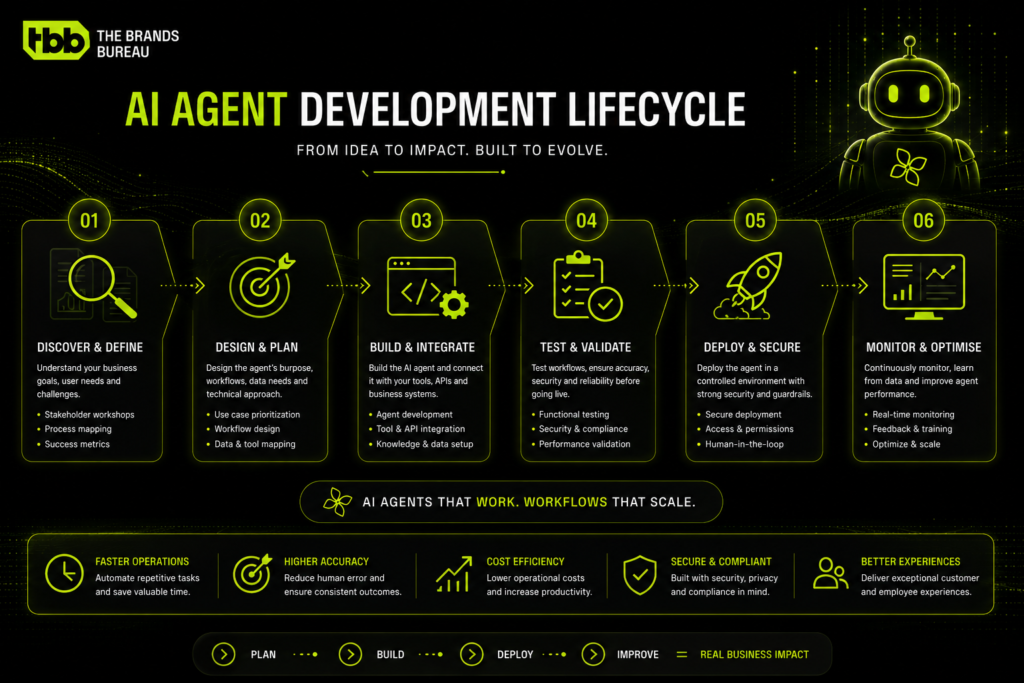
A structured development process reduces wasted investment and makes the result easier to evaluate. A good project begins with a defined business outcome and ends with measurable acceptance criteria, documentation and an operational support plan.
An original planning framework for evaluating an AI agent project.
The technology stack should follow the project requirements rather than dictate them. Common options include:
These tools serve different purposes and are not interchangeable in every situation. Your developer should explain why the proposed stack fits your existing infrastructure, deployment needs and security requirements.
Expert insight: Agree on acceptance tests before development begins. For a support agent, tests might cover correct order retrieval, refusal to expose another customer’s data, handling of missing records and escalation of refund requests.
AI agents introduce risks because they can interpret information, interact with connected systems and sometimes take actions. A secure implementation must limit what the agent can access, test how it behaves under unexpected conditions and provide a reliable way for people to intervene.
The UK Information Commissioner’s Office publishes guidance on AI and data protection, including risk assessment, fairness, transparency and safeguards for systems processing personal data. Consult its AI and data protection guidance.
A business should also review its contractual obligations, data processing arrangements, retention practices and any sector-specific requirements before launch.
An agent may be unnecessary if a task follows a simple, stable set of rules. It may also be unsuitable when errors could cause serious harm and the organisation cannot implement sufficient safeguards, monitoring or human oversight.
For instance, a fixed process that sends a confirmation email after a completed booking may work better as conventional automation. An agent becomes more useful when the workflow requires interpreting varied requests, retrieving contextual information or choosing among several authorised next steps.
Expert insight: Give an agent autonomy only where you can explain, test and monitor the boundaries of its authority.
AI agent development services can help UK businesses automate repetitive tasks, improve customer interactions and connect disconnected workflows. The strongest projects start with a specific business problem, use suitable integrations, include measurable success criteria and keep sensitive decisions under appropriate human control.
Before choosing a provider, compare technical capability, data security, ongoing costs and post-launch support. The Brands Bureau can use this topic to start a conversation with businesses exploring AI-powered workflows. Contact the team through The Brands Bureau website to discuss your requirements and determine whether a custom AI solution fits your goals.
How long does it take to develop a custom AI agent?
The timeline depends on the number of integrations, the quality of your data, the complexity of the workflow and the required safeguards. A focused prototype usually involves less work than a production system connected to several business applications. Ask your provider for separate discovery, prototype, testing and deployment milestones rather than relying on one undetailed delivery estimate.
Can AI agents integrate with Shopify, WooCommerce and CRM systems?
Yes, when the relevant platforms expose suitable APIs, supported integrations or other authorised access methods. An agent might retrieve order details, classify customer enquiries or prepare updates for a CRM. Before development, confirm the platform’s permissions, API limitations, data access rules and available integration methods.
Are AI agents suitable for small businesses with limited budgets?
They can be, particularly when a business has a repetitive task that consumes staff time and can be automated safely. A small business should begin with one clearly defined workflow instead of investing immediately in a complex multi-agent platform. Compare the full operating cost against measurable benefits before expanding the project.
What is agentic AI development in the UK?
Agentic AI development UK businesses commission involves building systems that can pursue defined goals through multiple steps, use approved tools and adapt their actions to available information. Good implementations include permission boundaries, testing and human oversight. The term describes a technical approach, not a guarantee of full autonomy or business results.
How can a business measure the success of an AI agent?
Measure the outcome the agent is supposed to improve. Useful metrics include task completion rate, answer accuracy, average handling time, escalation rate, cost per completed task and the frequency of incorrect actions. Establish a baseline before launch and compare results using consistent definitions. A faster workflow is not a success if error rates or customer complaints increase.
Do UK businesses need to consider data protection when using AI agents?
Yes, when an agent processes personal data, the business must assess its applicable data protection obligations. The ICO’s guidance on AI and data protection covers issues such as lawfulness, transparency, fairness, security and individual rights. Organisations should assess their specific use case and seek specialist advice when necessary.
Written and reviewed by the The Brands Bureau team.
The Brands Bureau is the publishing brand for this article. The team can use this guide to help business owners and marketing professionals understand AI development options, evaluate providers and make informed decisions about automation investments.
Leave A Reply Now